This post contains affiliate links, which means the website may earn a small commission at no extra cost to you if you make a purchase through them. The HerHealth101 team only recommends products that align with our mission to support women’s health, and is not a reflection of any specific author. Your support helps keep this site growing. Thank you!
Written by Dr. Victoria Scott, MD
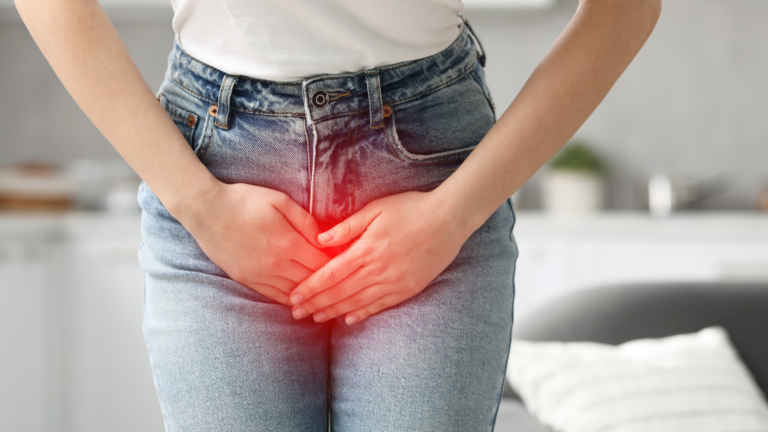
That frustrating, burning sensation when you pee is something so many women know all too well. Your first thought is almost certainly that it is just another urinary tract infection, and statistically, you are probably right since it is by far the most frequent culprit of painful urination and more than half of all women will experience a UTI at some point in their life. Or perhaps it is a vaginal infection caused by yeast, bacteria or trichomoniasis. But what happens when you finish your course of antibiotics and that familiar, discomfort stays behind, or it comes roaring back just days later? It can be deeply discouraging, and it leaves many women feeling entirely helpless and confused about what is actually going on with their bodies.

When Antibiotics Aren’t Working
If you’re a woman who keeps getting prescribed antibiotics for painful urination, and those standard treatments fail to bring relief, it is time to look at another possibility that looks a lot like a chronic infection but behaves very differently. Interstitial cystitis, or IC, is a complex condition that shares an incredible amount of symptom overlap with a classic UTI. Both issues can cause significant pelvic discomfort, an intense urgency to go right now, and a need to run to the bathroom frequently. Because the symptoms can look identical on the surface, it is incredibly easy for IC to be misdiagnosed or missed entirely, leaving women trapped in a cycle of taking unnecessary medications that do not help.

UTI vs Interstitial Cystitis (Bladder Pain Syndrome)
The fundamental difference between the two boils down to whether or not a true biological intruder is present. A UTI is an inflammatory response triggered by an actual infection, usually bacteria or occasionally fungus, that has made its way into your bladder. Interstitial cystitis, on the other hand, mimics all of those painful sensations without any infection being present at all. When we look at IC from a diagnostic standpoint, we define it as an unpleasant pressure, pain, or discomfort localized to the bladder region that persists for longer than six weeks without any clear, identifiable cause.

A Diagnostic Challenge
Because there is no simple test that can instantly confirm IC, we rely heavily on a classic urine culture to figure out which path we are on. When you submit a urine sample, a positive culture that shows bacterial or fungal growth points straight toward a UTI, which can then be targeted with the right prescription. If your culture comes back completely clean but you are still in significant pain, that is a major red flag that something else is at play. We actually consider IC a “diagnosis of exclusion”, meaning we have to rule out other culprits before we can confidently name it, and because it is so unique to each person, there is no single miracle cure or one-size-fits-all therapy.
Medical researchers are still working hard to pinpoint exactly why some bladders develop IC, but we do have a few strong theories. It might stem from subtle damage to the glycosaminoglycan layer, which is the protective lining that keeps harsh urine from irritating the bladder wall. Other times, it may be linked to an autoimmune response, localized nerve hypersensitivity, or dysfunction in the pelvic floor muscles that causes them to hold onto tension.

A Quick Help Chart
Navigating the differences between an ongoing infection and chronic bladder pain can feel overwhelming when you are just trying to find relief. To help make sense of what you might be experiencing, it can be useful to look at how these two conditions diverge across specific clinical features.
| Feature | UTIs | IC |
| Urine culture results | Shows bacterial or fungal growth | No bacterial or fungal growth |
| Urinalysis markers | Frequently positive for white blood cells, red blood cells, nitrites, and leukocyte esterase | Typically negative for white blood cells, red blood cells, nitrites, and leukocyte esterase |
| Antibiotic response | Symptoms generally resolve after a standard treatment course | Symptoms show no improvement with antibiotic therapy |
| Urine appearance and odor | Cloudy or foul-smelling urine is a common complaint | Urine typically remains clear and normal in odor |
| Visible blood | Blood is occasionally present in the urine | Blood is rarely or almost never found in the urine |
| Systemic signs | Fever and chills can occur, especially if the infection spreads | Fever and chills are entirely absent |
If you find yourself stuck in a loop of negative cultures but persistent, draining bladder pain, please know that you are not imagining things and you do not have to just live with it. Recognizing that your pain might not be a standard infection is the very first step toward finding a specialist who can help you build a personalized plan to heal your bladder and get your quality of life back.

About the author:

Dr. Victoria Scott is a board certified and fellowship trained urogynecologist and pelvic reconstructive surgeon, as well as a certified menopause practitioner. She is passionate about educating her fellow healthcare professionals about the treatment of female pelvic floor disorders to improve the care of women with these conditions, and her research has influenced the approach of urinary tract infections.