Skip to content
This page may contain affiliate links, which means the website may earn a small commission at no extra cost to you if you make a purchase through them. The HerHealth101 team only recommend products that align with our mission to support women’s health, and is not a reflection of any specific author. Your support helps keep this site growing. Thank you!
Many women often describe it as feeling a sense of “heaviness” that they just can’t quite put into words. Other times, they say it’s like a persistent pressure or a fullness that seems to weigh them down as the afternoon rolls around.
This is frequently the first sign of pelvic organ prolapse, or POP, which is a common condition where the muscles and tissues supporting your pelvic organs become stretched or weakened. When this internal “hammock” loses its tension, organs like the bladder, uterus or the rectum can begin to shift from their natural positions and press against the vaginal walls.
Types of Pelvic Organ Prolapse
When we talk about the different types of prolapse, we are really looking at which nearby organ has decided to move into the vaginal space.
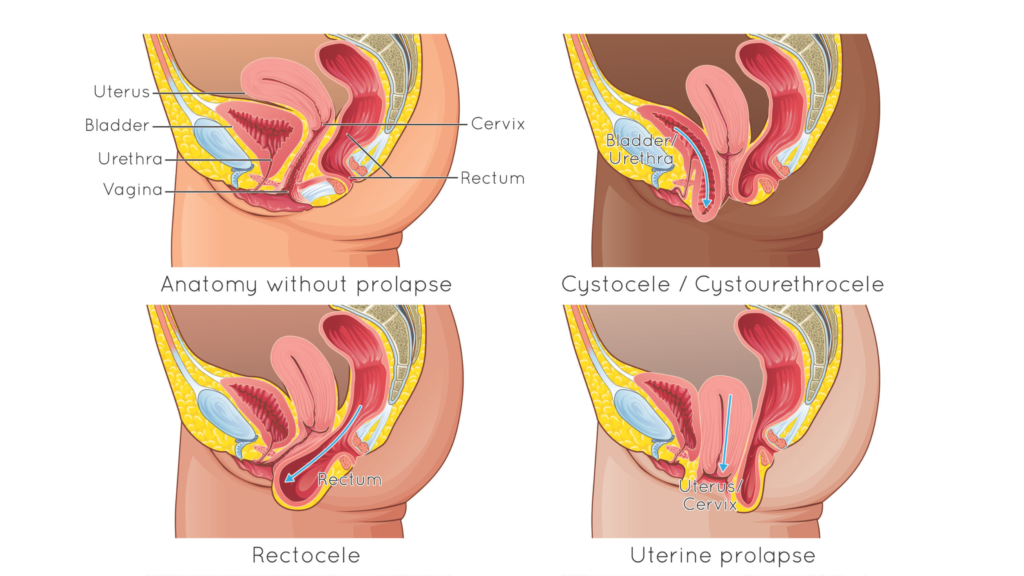
The most frequent condition I see in my practice is the cystocele, which is the medical term for a bladder prolapse. If the rectum is the organ involved, it often shifts forward into the back wall of the vagina, and that we call that a rectocele. In some instances, the uterus itself may descend, or even the top of the vagina if you have had a hysterectomy in the past.
Signs and Symptoms
Symptoms of prolapse can vary and are often dependent on which organ is affected. With a cystocele, because the bladder is involved, you might notice urinary symptoms, like realizing you are running to the bathroom more often, feeling a sudden urgency, or even struggling to feel like your bladder is completely empty.
On the other hand, if it is a rectocele, this specific type of shift often makes bowel movements feel difficult or incomplete, creating a different kind of daily discomfort.

The presentation of the prolapse can vary significantly from one person to the next, ranging from a subtle aching in the lower back to the more startling discovery of a physical bulge or lump that you can actually feel or see at the vaginal opening. You might find that your symptoms are nearly non-existent in the morning after a night of rest but become more pronounced after you’ve been on your feet all day or after doing some heavy lifting. This happens because gravity and physical exertion put additional stress on those already tired support tissues.
Treatment Options
I often tell my patients that the goal of our treatment isn’t just to “fix” an organ, but to restore the quality of your life so you can move through the world without being constantly aware of your pelvic floor.
The truth is that most women will develop some degree of pelvic organ prolapse as they get older, especially after having children. Fortunately, most cases are asymptomatic and the majority of women do not experience discomfort. Prolapse itself is not a life threatening condition, so the treating of it is determined by the severity of symptoms. Thus, no medical intervention is necessary if there are no complaints to address.

For some women though, especially when the prolapse is mild, we might start with pelvic floor physical therapy to strengthen those internal muscles or discuss lifestyle adjustments like managing chronic coughs or constipation that put extra pressure on the area. Others find great relief with a pessary, which is a small, removable device that acts like a supportive brace for the organs. Of course, if those options don’t provide the relief you need, there are various surgical approaches designed to reinforce the native tissue or provide new support structures.
The most important thing I can share with you is that you do not have to wait until a prolapse is “severe” to seek help or ask questions. If you are feeling that telltale pressure or noticing changes in how your bladder or bowels are functioning, it is worth a conversation with your doctor.
About the Author:

Dr. Kai Dallas is a board certified and fellowship trained urogynecologist and pelvic reconstructive surgeon at City of Hope, and is also the current Chair of Urology at Palmdale Regional Medical Center. He specializes in female pelvic health with clinical expertise in pelvic pain, pelvic organ prolapse and bladder disorders.