Skip to content

This post contains affiliate links, which means the website may earn a small commission at no extra cost to you if you make a purchase through them. The HerHealth101 team only recommends products that align with our mission to support women’s health, and is not a reflection of any specific author. Your support helps keep this site growing. Thank you!
One of the most underdiagnosed conditions I see in pelvic health is Pelvic Congestion Syndrome, or PCS. To understand PCS, it helps to think about varicose veins, which many people are familiar with seeing in the legs. In simple terms, pelvic congestion syndrome is essentially varicose veins of the pelvis.
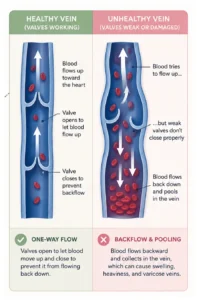
When Vein Valves get Weak
Inside the pelvis, veins are responsible for carrying blood back up toward the heart against gravity. To keep blood moving in one direction, these veins rely on tiny, one way valves. When those valves become weak or stop closing properly, blood begins to flow backward and pool inside the veins. Over time, this pooling causes the veins in the lower abdomen and around the uterus or ovaries to stretch, engorge, and swell. Because the pelvic cavity is a relatively tight space packed with sensitive nerves, that extra pressure creates a very real, very physical source of chronic discomfort.
Who is predisposed to PCS?
Pelvic congestion syndrome primarily affects women of childbearing age, most commonly those between twenty and forty-five who have experienced multiple pregnancies. Pregnancy is actually one of the biggest risk factors because the dramatic increase in blood volume, combined with structural changes in the pelvis and natural hormone surges that relax blood vessel walls, can permanently stretch pelvic veins and damage their internal valves. Women with a family or personal history of varicose veins in the legs, or those with conditions that elevate systemic estrogen levels, are also at a higher baseline risk.
How does PCS present?
The hallmark symptom of pelvic congestion syndrome is a deep, heavy ache in the lower abdomen or lower back, which persists for more than six months. Patients often tell me that the pain is noticeably worse at the end of a long day, especially if they have been standing or sitting for extended periods. It is also very common for the discomfort to intensify during or after intercourse, or right before a menstrual cycle when blood flow to the region naturally increases. Some women also experience accompanying symptoms like irritable bowel habits, bladder urgency, or visible varicose veins around the vulva or upper thighs.

Diagnosing PCS
Diagnosing PCS requires a clear understanding of what to look for, because standard abdominal ultrasounds do not always capture blood flow dynamics while you are lying flat on an exam table. When I suspect pelvic congestion, we often utilize specialized diagnostic imaging, such as a pelvic transvaginal ultrasound with Doppler to evaluate blood velocity, or an MRI or CT scan specially calibrated to look at the pelvic vasculature. In some cases, a procedure called a venogram is used to map out the exact veins that are failing.
Because chronic pelvic pain can stem from several overlapping systems, arriving at an accurate diagnosis of pelvic congestion syndrome requires careful work up and a systematic approach to rule out other common conditions, such as endometriosis, interstitial cystitis, chronic recurrent urinary tract infections, uterine fibroids or pelvic inflammatory disease, as well as gastrointestinal disorders like irritable bowel syndrome.

Treatment options for PCS
The most important message I can share as a urologist and pelvic specialist is that you do not have to just manage the pain on your own. Once we identify that enlarged veins are the culprit, we have effective, minimally invasive treatment options available. Initial management often involves hormonal medications, such as progestins or gonadotropin-releasing hormone agonists, which help decrease pelvic blood flow and shrink the affected veins to reduce daily aching. If conservative medical therapy does not offer enough relief, the gold standard treatment is a minimally invasive, non-surgical procedure called pelvic vein embolization. Performed by a specialist under mild sedation, a small catheter is guided through a vein in your neck or groin directly into the problematic pelvic vessels. Using tiny coils or a sclera-agent, the specialist intentionally seals off the stretched, failing veins. Blood then naturally reroutes into nearby healthy, fully functional veins with working valves, which dramatically reduces pooling and pressure. Embolization has high success rates for long-term symptom relief, allowing most women to return to their normal activities within just a few days without the need for a major open surgery or a long recovery period.
If you have been living with unexplained, chronic pelvic heaviness that gets worse as your day goes on, please know that your pain is real and there are answers out there. Finding a care provider who specializes in complex pelvic health is the first step toward getting an accurate diagnosis and restoring your quality of life.


About the Author:
Dr. Kai Dallas is a board certified and fellowship trained urogynecologist and pelvic reconstructive surgeon. He specializes in female pelvic health with clinical expertise in pelvic pain, pelvic organ prolapse and bladder disorders.