This post contains affiliate links, which means the website may earn a small commission at no extra cost to you if you make a purchase through them. The HerHealth101 team only recommends products that align with our mission to support women’s health, and is not a reflection of any specific author. Your support helps keep this site growing. Thank you!
Few routine medical appointments cause as much collective anxiety as the annual woman’s wellness exam, specifically when it is time for a Pap smear. That tiny paper gown, the cold metal or plastic speculum, and the vulnerability of the position can make even the most empowered person want to skip the appointment entirely. But demystifying exactly what happens on that exam table can help transform an anxiety-inducing chore into a powerful, straightforward act of self-care.

What does a pap smear test for?
A Pap smear, or Pap test, is a screening method designed to detect abnormal cell changes on your cervix. It is named after Dr. Georgios Papanikolaou, who developed the technique in the 1920s. The primary goal of a Pap smear is not actually to find cancer, but rather to prevent it by catching precancerous cell changes early enough that they can be treated before they ever have a chance to turn into malignancy. Today, this test is often paired with an HPV test, which checks the same cells for the presence of the high-risk human papillomavirus, the underlying cause of almost all cervical cancers.
Statistically speaking, the introduction of the Pap smear is one of the greatest success stories in the history of modern public health. In the early 1900s, cervical cancer was one of the leading causes of cancer death for women in the United States. Since the implementation of regular screenings by the early 1960s, cervical cancer rates and mortality have plummeted by more than seventy percent! Fortunately, cervical cancer is a disease that progresses very slowly, often taking several years for abnormal cells to become invasive, giving regular screening a wide, highly effective window to intervene and save lives.
What to expect at your appointment
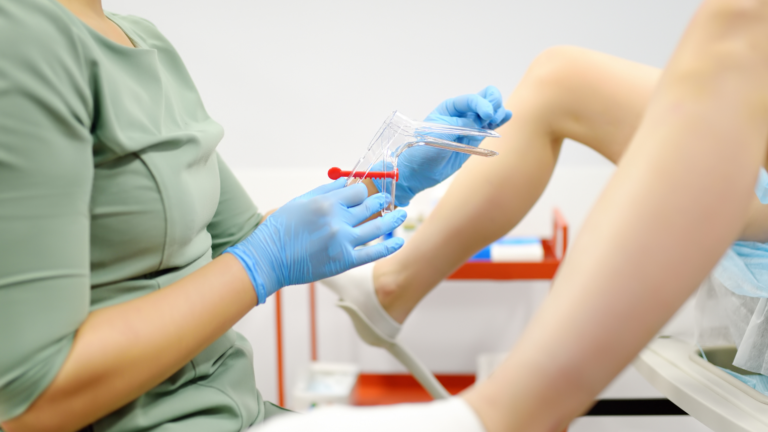
Understanding the step-by-step reality of the procedure can help take away the fear of the unknown. When you get into the exam room, you will be given a privacy sheet and asked to undress from the waist down. Once you are lying on the table, you will place your heels in the stirrups and slide your hips down to the very edge of the bed. Your provider will ask you to take a deep breath and let your knees fall open, which helps relax the pelvic floor muscles.
Next, the provider will gently insert a lubricated tool called a speculum into the vagina to hold the vaginal walls apart, allowing a clear view of your cervix. You will feel a sensation of pressure or widening, but it should not be sharp pain. Once the cervix is visible, the provider uses a small plastic spatula and a tiny, soft brush to gently swipe the surface and collection zone of the cervix, gathering a sample of cells. This swiping part takes less than ten seconds and can cause a brief, mild cramping sensation. The collected cells are then placed into a liquid vial and sent off to a pathology lab where experts examine them under a microscope.

What the results can mean
Waiting for results can be hard and might take a few days. A normal result means no abnormal or atypical cells were found, and you are clear until your next routine screening. And an abnormal result does not necessarily mean you have cancer. it simply means the pathologist saw cells that look different than they should. The most common abnormal finding is “atypical squamous cells of undetermined significance” (ASCUS), which literally just means the cells look slightly unusual due to a condition such as a simple vaginal infection or hormonal shifts.
If your results show more distinct changes, such as low-grade or high-grade squamous intraepithelial lesions, it indicates varying degrees of precancerous changes. Remember, the Pap test is a screening tool, not a final diagnosis. Depending on these results and your HPV status, the next step might simply be repeating the test in a year to see if your immune system clears the cells on its own. For more concerning cellular changes, your doctor will likely recommend a colposcopy, which is an in-office procedure where a specialized magnifying instrument is used to closely inspect the cervix and potentially take a tiny biopsy to get a definitive diagnosis.
Follow up may also be recommended even if your cells looks completely normal, but if you test positive for the most aggressive strains of HPV, specifically types 16 or 18, because these two strains are responsible for the majority of cervical malignancies.

How often should you get screened?
Fortunately, modern guidelines mean you no longer need to endure this test every single year. For average-risk individuals, regular screening begins at age twenty-one.
- Age 21-29: Pap Test every 3 years. No routine HPV testing.
- Age 30-65:
- Option 1 – HPV testing (without Pap Test) every 5 years.
- Option 2 – HPV and Pap Test every 5 years.
- Option 3 – Pap Test every 3 years.
HPV testing is not routinely recommended for women under 30 due to how common and transient the virus is in your twenties.
Once you reach age sixty-five, you can generally stop screening entirely, provided you have a history of normal results over the preceding decade.
Some women, however, may fall into a higher risk category that need to be screened more often or past the age of 65. This can include women who have a history of high-grade precancerous cells or cervical cancer, women who are immunocompromised due to having had a transplant, chemo or radiation therapy or are taking certain medications, or are living with HIV. Another very specific situation that is becoming less prevalent, is if you are a woman whose mother was prescribed Diethylstilbestrol (DES) during pregnancy. This was a medication that was given to women until 1971 to prevent miscarriages, but later research discovered the daughters exposed to the drug in utero had a significantly higher risk of cancer.

Resources to schedule your screening test
Ultimately, taking control of your cervical health is one of the most straightforward and impactful decisions you can make for your body. If you are due for a screening, know that a Pap smear can be performed by either a gynecologist or your primary care physician, so you should choose whichever provider you feel most comfortable with and can see the soonest.
If you currently do not have a doctor or are without health insurance, please know that you still have excellent, accessible options to get the care you deserve. Programs like the National Breast and Cervical Cancer Early Detection Program provide low-cost or completely free screenings to those who qualify. You can also reach out to your local county public health department, community health centers, or a nearby Planned Parenthood clinic. These organizations specialize in providing comprehensive, confidential reproductive healthcare regardless of your financial situation, ensuring that cost never stands between you and a life-saving preventative test.