This post contains affiliate links, which means the website may earn a small commission at no extra cost to you if you make a purchase through them. The HerHealth101 team only recommends products that align with our mission to support women’s health, and is not a reflection of any specific author. Your support helps keep this site growing. Thank you!
Every time I walk into a salon or watch someone show off a flawless new set of nails, I notice how completely obsessed we have all become with achieving the absolutely perfect manicure. The latest trend is called a Russian Manicure, or sometimes an e-file manicure, and it promises to make your polish last for weeks without a single hangnail in sight. But when we look at this trend through a medical lens, those flawless results come with some serious hidden costs that might make you think twice before booking that next salon appointment.
How is it different from a regular manicure?
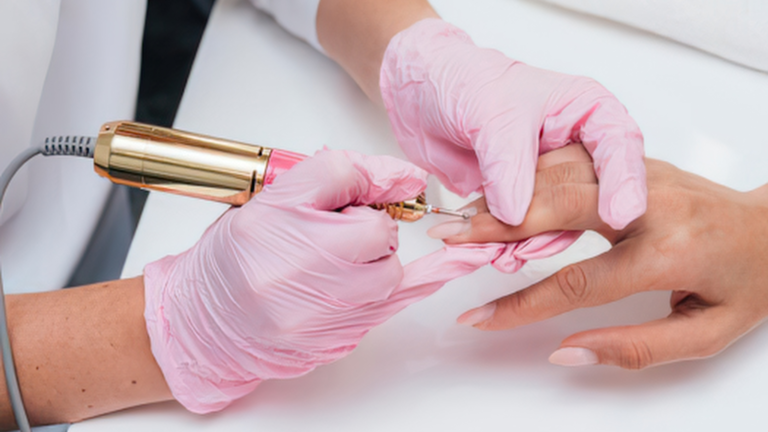
The difference is in the cuticle preparation. A traditional manicure focuses on soaking the hands, gently pushing back the skin, and trimming only the loose pieces. A Russian manicure flips this process completely on its head by working entirely on dry skin using an electric file, which is essentially a high-powered drill fitted with various diamond-tipped bits. The nail technician uses this tool to aggressively file away the cuticle down the skin surrounding the entire nail bed. The goal is to remove every single trace of tissue around the base of the nail, creating a perfectly smooth, deep pocket where the technician can tuck the gel polish slightly underneath the skin line. This is exactly why it looks so seamless and lasts so long, because it takes an extra week or two for the regrowth to even show.
What is a cuticle for?
While the before and after photos are undeniably stunning, the process itself requires breaching your body’s natural defenses. That little strip of skin we call the cuticle isn’t just an annoying blemish to be filed away, it is actually a protective seal designed by nature to keep bacteria, fungi, and moisture out of your delicate nail matrix. The nail matrix is the hidden area underneath the skin where your new nail cells are actively formed. When a technician uses a mechanical drill to grind away that entire protective barrier, they are essentially leaving the door wide open for all kinds of pathogens to enter your body.

The danger.
The immediate risk you run with this kind of deep cuticle work is a painful bacterial infection called paronychia. If you have ever had a tiny hangnail that turned red, swollen, and throbbing, you have experienced a mild version of this. When an electric file goes too deep, it creates micro-tears in the living tissue that are invisible to the naked eye but serve as a perfect highway for bacteria. In a standard salon environment where tools might not be sterilized to true surgical hospital standards, the risk skyrockets. Even worse, if the rotating drill bit slips or applies too much pressure to the nail bed itself, it can permanently damage the nail matrix. This can cause your nails to grow back with permanent ridges, splits, or even cause the nail plate to separate from the skin entirely, a condition known as onycholysis.
Beyond the immediate threat of infection, there is a long term consequence that many do not realize until it is too late. Your skin is incredibly smart and responsive to friction. When you repeatedly subject the delicate skin around your fingertips to heavy mechanical filing, your body perceives that intense friction as injury and trauma. To protect itself, the skin begins to produce thick, hardened calluses in response. It becomes a vicious cycle where the skin grows back thicker and rougher than before, making you feel like you constantly need to go back for another aggressive cleanup just to keep them looking smooth.
The verdict.
If you absolutely love the look and still want to try it, you need to be incredibly selective about who touches your hands. This is not a service you should get from a standard walk-in salon. It requires advanced, specialized training to master the pressure and angles of an electric file without tearing into live tissue. You want to look for a technician who works in a private, ultra-hygienic setting and uses a medical-grade autoclave to sterilize their metal bits between every single client, because simple liquid disinfectants simply will not cut it when you are dealing with broken skin.
At the end of the day, our hands tell our stories and do so much incredible work for us. Healthy nails are always going to be more beautiful than a temporary trend that risks permanent damage. There are plenty of ways to achieve a gorgeous, clean manicure using gentle, traditional methods that honor your body’s natural anatomy rather than fighting against it.