Skip to content
This post contains affiliate links, which means the website may earn a small commission at no extra cost to you if you make a purchase through them. The HerHealth101 team only recommend products that align with our mission to support women’s health, and is not a reflection of any specific author. Your support helps keep this site growing. Thank you!
If you’re reading this, you’ve probably already spent a lot of late nights scrolling through forums and feeling like your body is failing a test you didn’t know you were taking. I want to stop you right there. IVF, or In-Vitro Fertilization, is basically just a very high-tech way of giving nature a helping hand. It is incredibly common, (millions of babies have been born this way,) and there is absolutely zero shame in using the miracles of modern science to build your family. It doesn’t make you less of a woman or less of a mother.
It makes you a warrior who is willing to do whatever it takes.
Women turn to IVF for a many different reasons, and often it’s a combination of factors rather than just one thing. Some of the most common reasons include blocked or damaged fallopian tubes, or endometriosis. Then there are women dealing with PCOS or other ovulation disorders, or those who are a bit further along in their life journey and facing a natural decline in egg quality. It’s also a vital tool for the LGBTQ+ community to build their families, as well as for women who know they carry a genetic disorder and want to use pre-implantation testing to ensure they don’t pass it on to their babies. We also see many couples dealing with “male factor” issues, like low sperm count or motility, where the lab can step in and do the heavy lifting of fertilization. Whatever the reason, it’s all about using the best tools we have to get to that goal of a healthy pregnancy.
The IVF Process:
Pre-screening:
So where do you even begin? You and your partner (if you have one) will go through several rounds of screenings: checking hormone levels like FSH and AMH, doing ultrasounds to count your follicles, and making sure your uterine lining is ready for a baby.
Prepping for Egg Retrieval:
Once you get the green light, you move into the pre-retrieval phase. For about 8 to 14 days, you’ll be giving yourself daily injections of hormones to stimulate your ovaries to produce multiple eggs instead of just the usual one. These will likely include Follicle-Stimulating Hormone (FSH) which, you guessed it, stimulate your follicles to grow multiple eggs at once, rather than just one, and Luteinizing Hormone (LH) to help with the quality and final maturation of the eggs. You’ll be heading to the clinic every other day for bloodwork and ultrasounds so they can monitor those follicles. Around day 5 or 6, the clinic may add another injection that prevents your body from ovulating too early. Without this, your body might try and release the eggs before the doctor can retrieve them.
It’s totally normal to start feeling like a balloon by the end of the first week. As these follicles grow, sometimes as many as 15 or 20 of them, your ovaries will literally expand to the size of grapefruits. When the follicles finally reach the perfect size, (about 18-20mm,) your doctor will tell you when to do the “trigger shot”, the final injection that sets the clock for retrieval exactly 36 hours later.
The Retrieval:
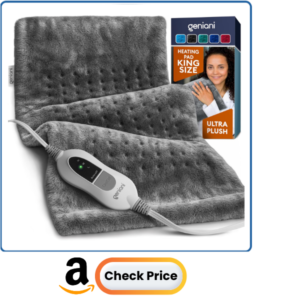
The retrieval itself is a quick surgical procedure. You’re under light sedation, so you won’t feel a thing while the doctor uses a thin needle to gently collect the eggs. Afterward, you might feel some cramping or bloating, so you may be advised to take it easy with a heating pad and plenty of electrolytes.
Fertilization:
This is when the lab part of the process starts, where the scientists fertilize the good quality eggs and we wait to see how many grow into healthy embryos. Immediately after retrieval, the eggs are introduced to sperm. The next morning, the eggs are checked to see if they were successfully fertilized. If they were, they are now called an embryo. From day 2 onward, the cells will begin to divide. Around day 5 or 6, the cluster of cells begin to develop an inner and outer layered structure and is now in what is called a blastocyst stage.

Pre-Implantation:
While the lab is busy tending to eggs and embryos, the mother is now shifting her hormone cocktail to prepare her body for implantation. This is when progesterone is started in addition to estrogen to promote a thick uterine lining that will be receptive to the embryo.
Transfer and Implantation:
When it’s time for the transfer, it’s actually much simpler than the retrieval. It feels a lot like a pap smear, where on day 5 after retrieval, the doctor uses a tiny catheter to place the embryo into your uterus. In earlier days, it was common practice to transfer three or four embryos at one to see “what sticks”, but now IVF is much more precise. Typically, only one embryo is transferred to avoid risk of twins, and the embryo selected will the best options based on quality grading and preimplantation genetic testing. However, this is a conversation between the mother and doctor as there may be certain cases where multiple embryos might be transferred for optimum results.
Then comes the “two-week wait,” which is arguably the hardest part of the whole journey. During this time, you will continue to take progesterone to maintain a steady level of hormone to prevent the uterine lining from shedding, and depending on your specific protocol, you may also stay on estrogen.

Pregnancy:
Most fertility clinics will schedule the official pregnancy blood test for beta hCG levels 9 to 14 days after the transfer. If it’s positive, congratulations, but don’t exhale just yet. There are still a few milestones to reach before you can be confident the pregnancy will continue. The first step is ensuring that hCG levels continue to rise. At Week 6-7, you’ll have your first ultrasound and be able to see the ‘gestational sac’ and hopefully a tiny flickering heartbeat. At Week 8 to 12, the placenta will have grown large enough to begin producing its own estrogen and progesterone, so it’s finally time for you to wean off the hormone supplements. You’ll stay under the close eye of your fertility clinic until you get to this point, before you are referred to a regular OB-GYN and feel safe enough to share your news with the world.
Freezing Eggs and Embryos
In some cases, women may decide to start the process of IVF but not want to become a mom just yet. This can be a decision made as before getting medical procedures that can affect fertility, a woman who wants to preserve high quality eggs while waiting for other life conditions to become more ideal, or maybe you’re getting older and don’t want to close that chapter of opportunity just yet. These are all valid reasons. In these cases, the process of IVF is paused before implantation, and there is the option to freeze eggs or embryos.

If the goal is to freeze your eggs, a process called oocyte cryopreservation, within just a few hours of egg retrieval, the eggs are flash-frozen using a technique called vitrification. These eggs are essentially unfertilized single cells, paused in time.
If you are doing a full IVF cycle with a partner or donor sperm, you aren’t usually freezing eggs, you’re freezing embryos. In this case, the eggs are still fertilized in the lab after retrieval, and grown for about 5 or 6 days until they reach a multi-cellular blastocyte stage. It is at that point that they are frozen.
The benefit of freezing embryos vs eggs, is that embryos tend to be a bit hardier when it comes to the thawing process. In fact, some doctors will even recommend a Frozen Embryo Transfer (FET) for women who are desiring implantation, so that their body has a time to recover from the high-intensity hormones from the first half of the IVF process, making the uterus a more welcoming environment for implantation.
How Much Does It Cost?
The elephant in the room is always the cost. IVF is expensive, often ranging from $12,000 to $25,000 per cycle. Some insurance plans are starting to cover it, but if yours doesn’t, look into health savings accounts (HSAs), specialized fertility grants, or even clinical trials. Some clinics also offer “shared risk” programs where you get a portion of your money back if a pregnancy isn’t achieved.

When It Doesn’t Work
Unfortunately, IVF isn’t a magic wand for everyone. Some women might not be candidates due to severe underlying health issues or very low ovarian reserve. Even when everything goes perfectly, sometimes the embryos don’t develop properly, or the implantation just doesn’t take. It’s heartbreaking, but it’s not your fault. If IVF isn’t the path that works for you, there are so many other beautiful ways to build a family, from using donor eggs or sperm to looking into gestational surrogacy or adoption.
At the end of the day, there is no “right” way to become a mom. Whether your child starts in a petri dish, a surrogate’s womb, or through a legal document, the love that brings them into your life is exactly the same. Your path might look different than you imagined, and it might be a lot harder than you planned, but choosing to pursue motherhood is a beautiful, brave thing no matter how the story unfolds.
You’ve got this.